The Apsara Series takes its name from the celestial dancers of Hindu mythology—figures of movement, rhythm, and transformation. Each sculpture is assembled while the glass is molten, built on the end of a pipe using CNC-carved graphite molds derived from the artist’s own digital designs. These molds generate families of repeating units—five- and six-sided cones, truncated-icosahedral components, and other geometric forms—combined into shifting, modular arrangements.
As these repetitions accumulate, the sculptures grow into luminous structures that feel both organic and architectural. Precision meets heat: gravity softens edges, temperature subtly distorts volume, and the immediacy of the hot shop leaves each piece with motion suspended in glass. Part pattern, part ritual, part dance, the Apsaras merge digital geometry with the fluidity of molten material.
A group of Apsaras presented in the Pittsburgh Glass Center’s Silica Valley exhibition represented the seven chakras. Works from the series are currently on view in Magic, Light & Sacred Geometry: Glassworks by Frederick G. Kahl at the Cameron Museum of Art, through May 24, 2026.
The Apsaras
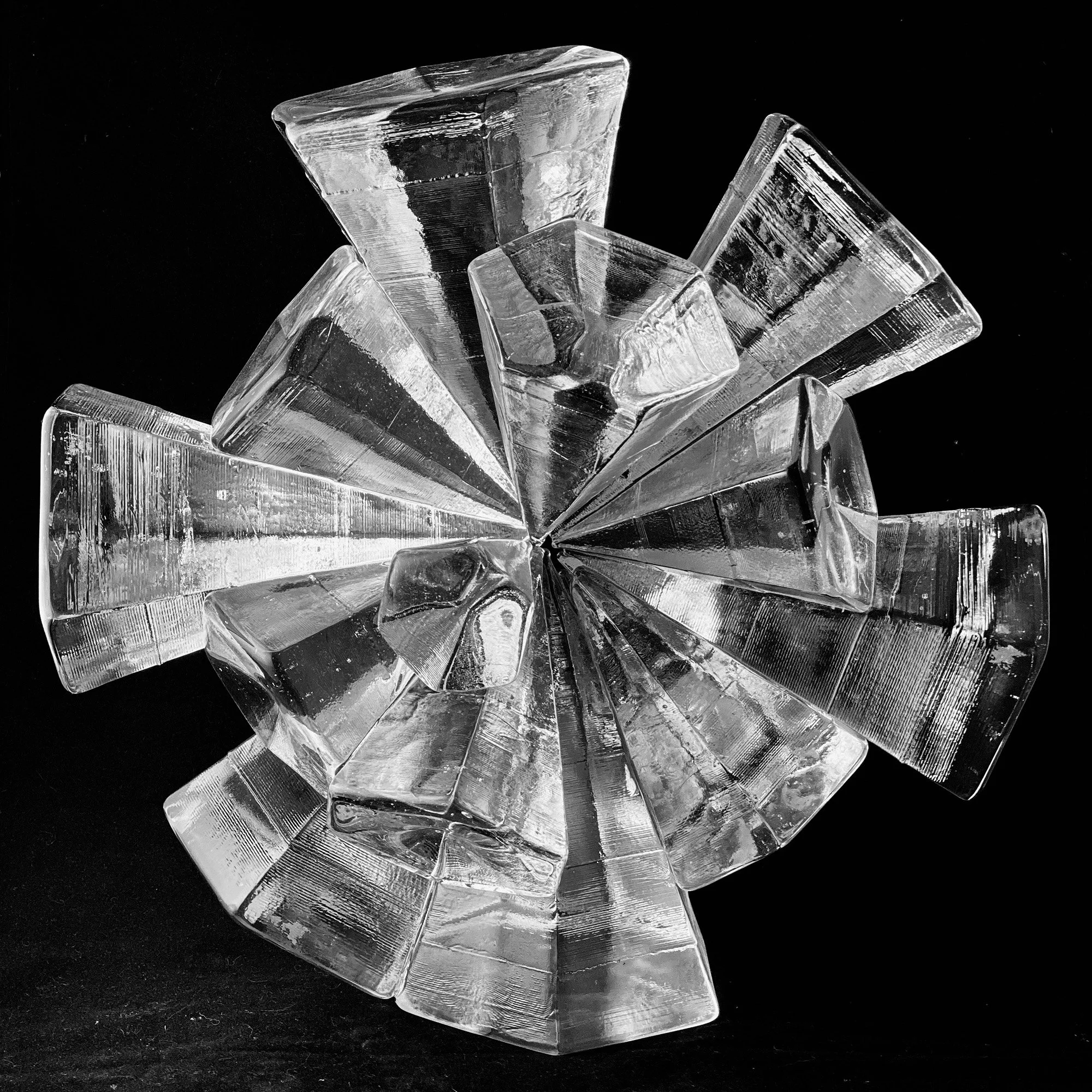
Sahasrara, 2018 Cast and offhand assembled glass 16.5x17.5x9”
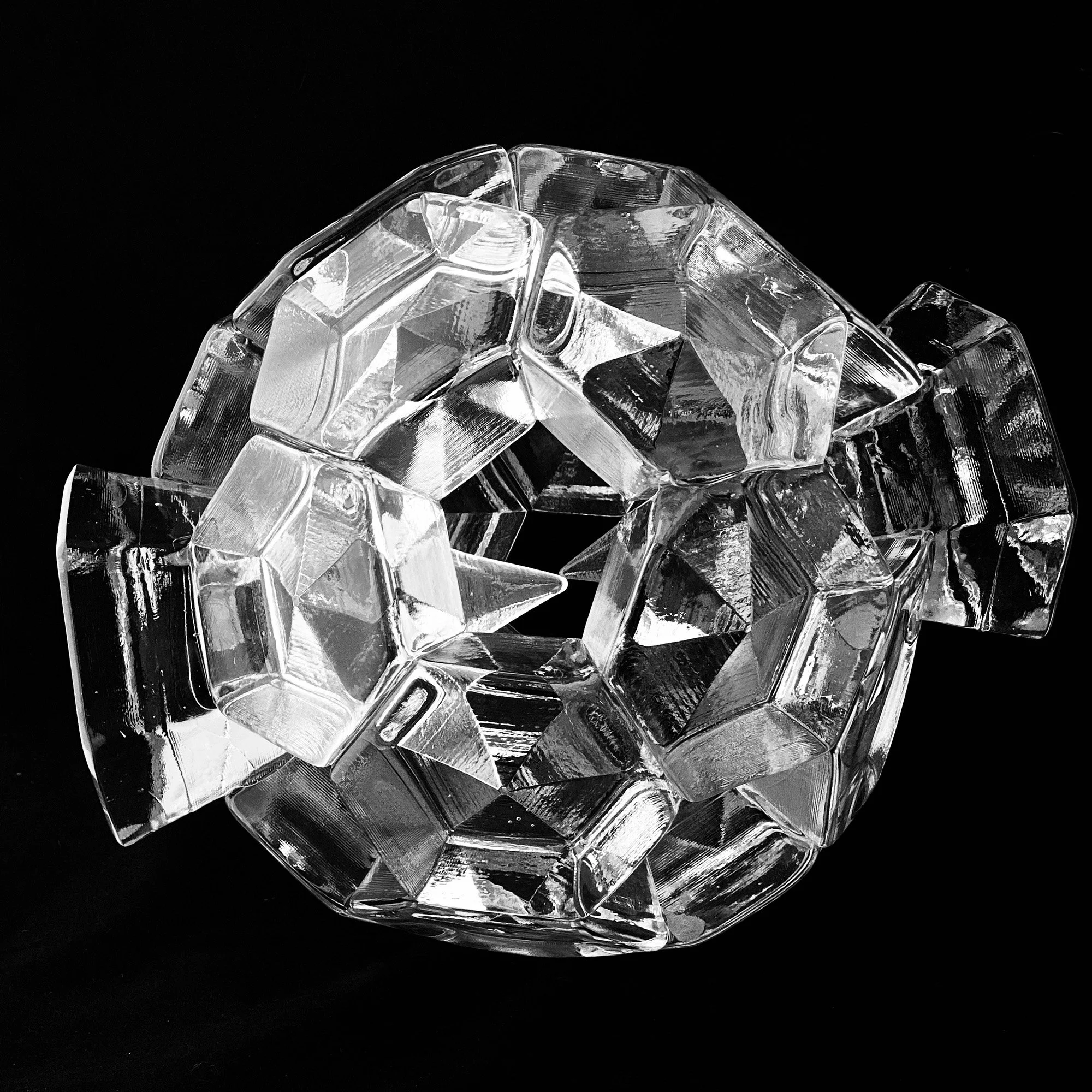
Ajna, 2019 Offhand hot assembled cast glass from digitally designed, CNC carved graphite molds 16x19x16”
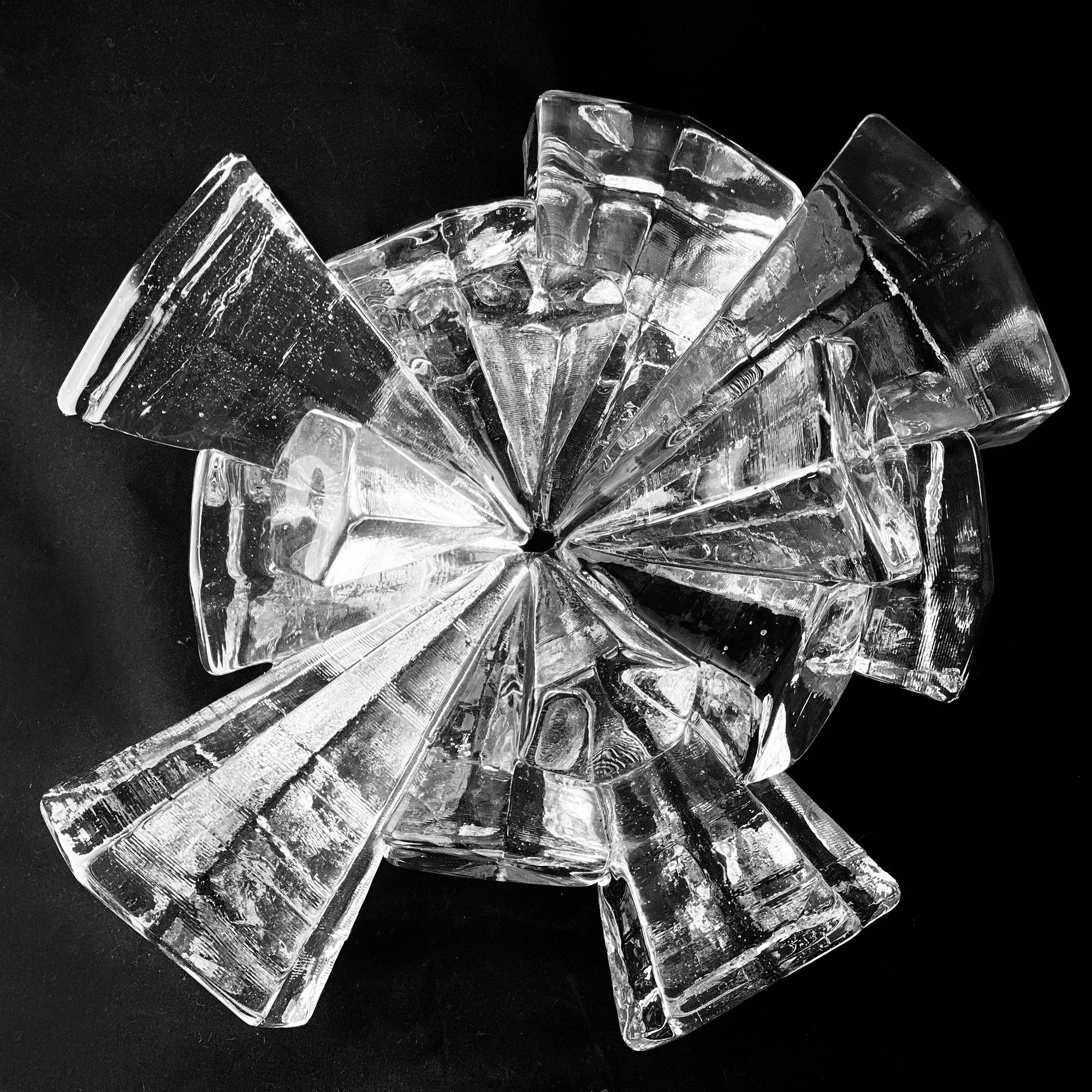
Anahata 2019 Offhand hot assembled cast glass from digitally designed, CNC carved graphite molds 14x14x9"
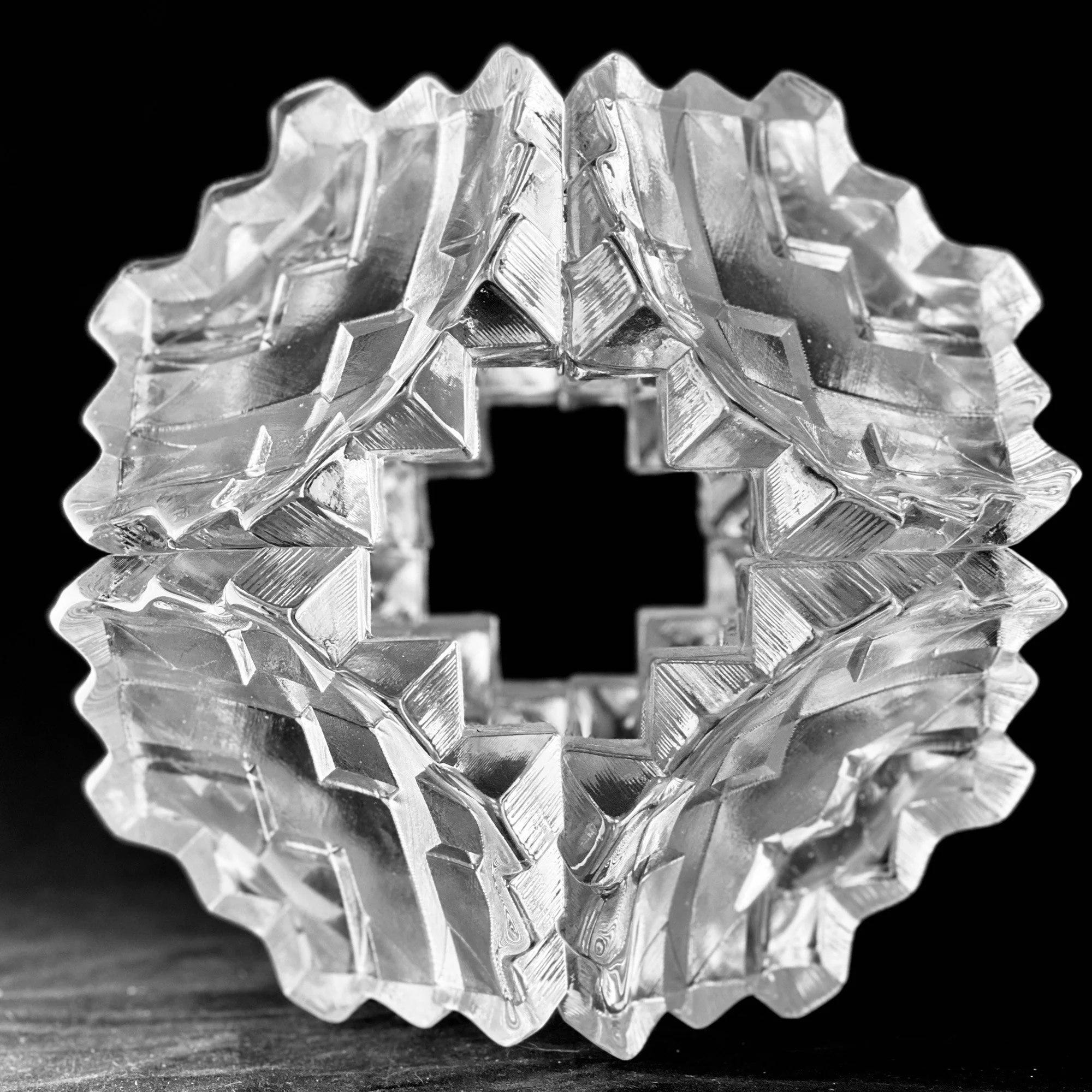
Manipura, 2018 Offhand hot assembled centrifugally cast glass from digitally designed, CNC carved graphite molds 15x15x15”
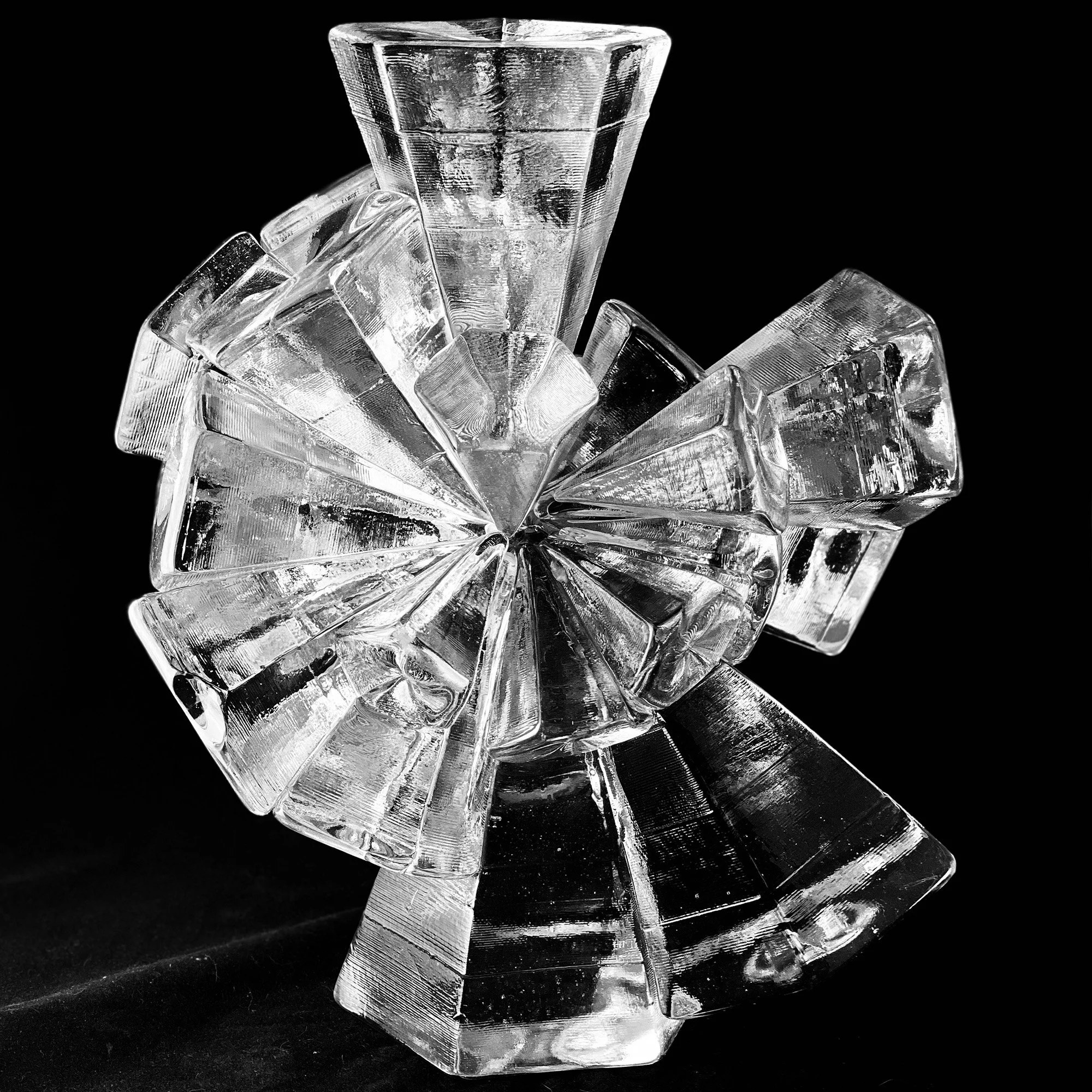
Vishuddha 2018 Offhand hot assembled cast glass from digitally designed, CNC carved graphite molds 16x13x12"
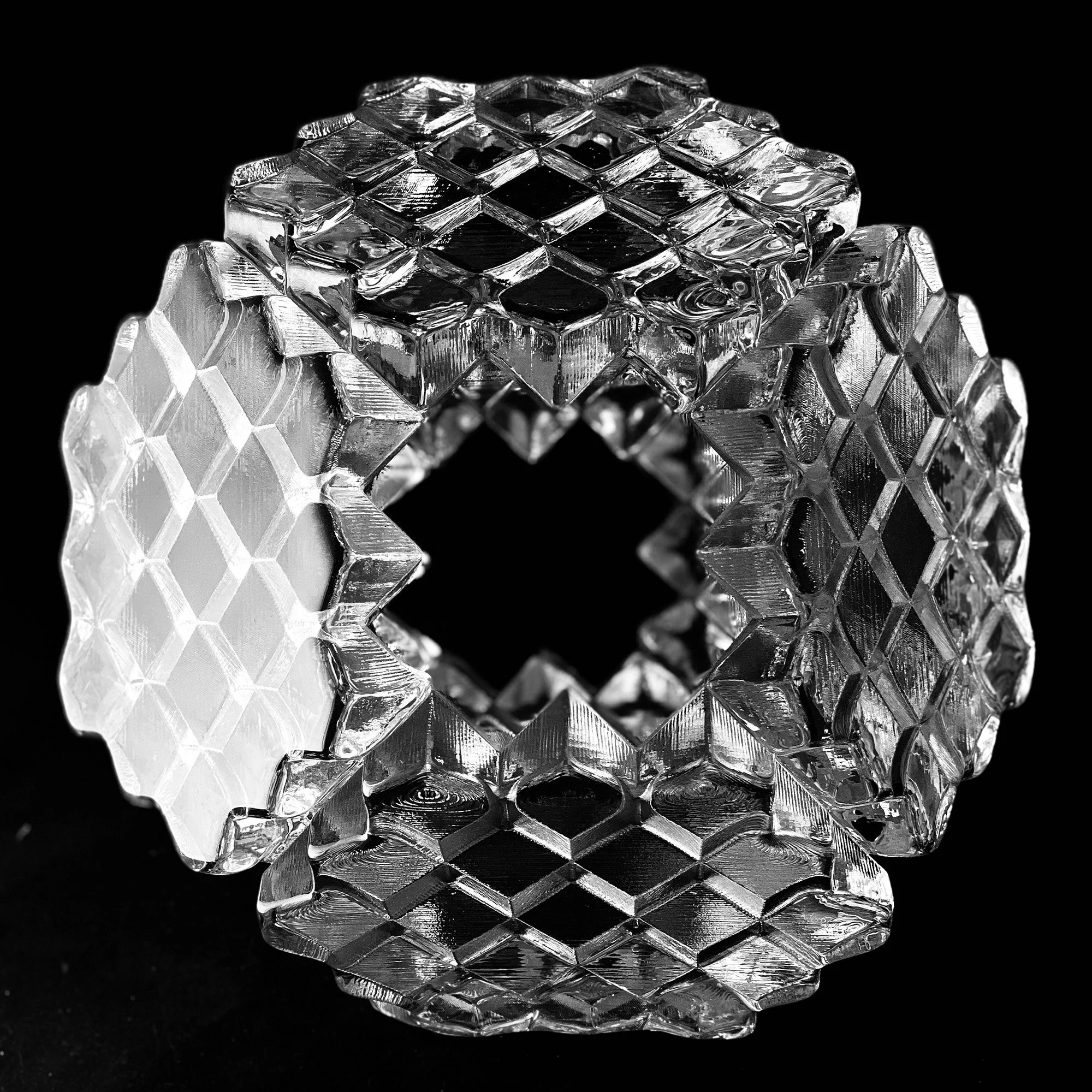
Svadhisthana 2018 Offhand hot assembled cast glass from digitally designed, CNC carved graphite molds 15x15x15”
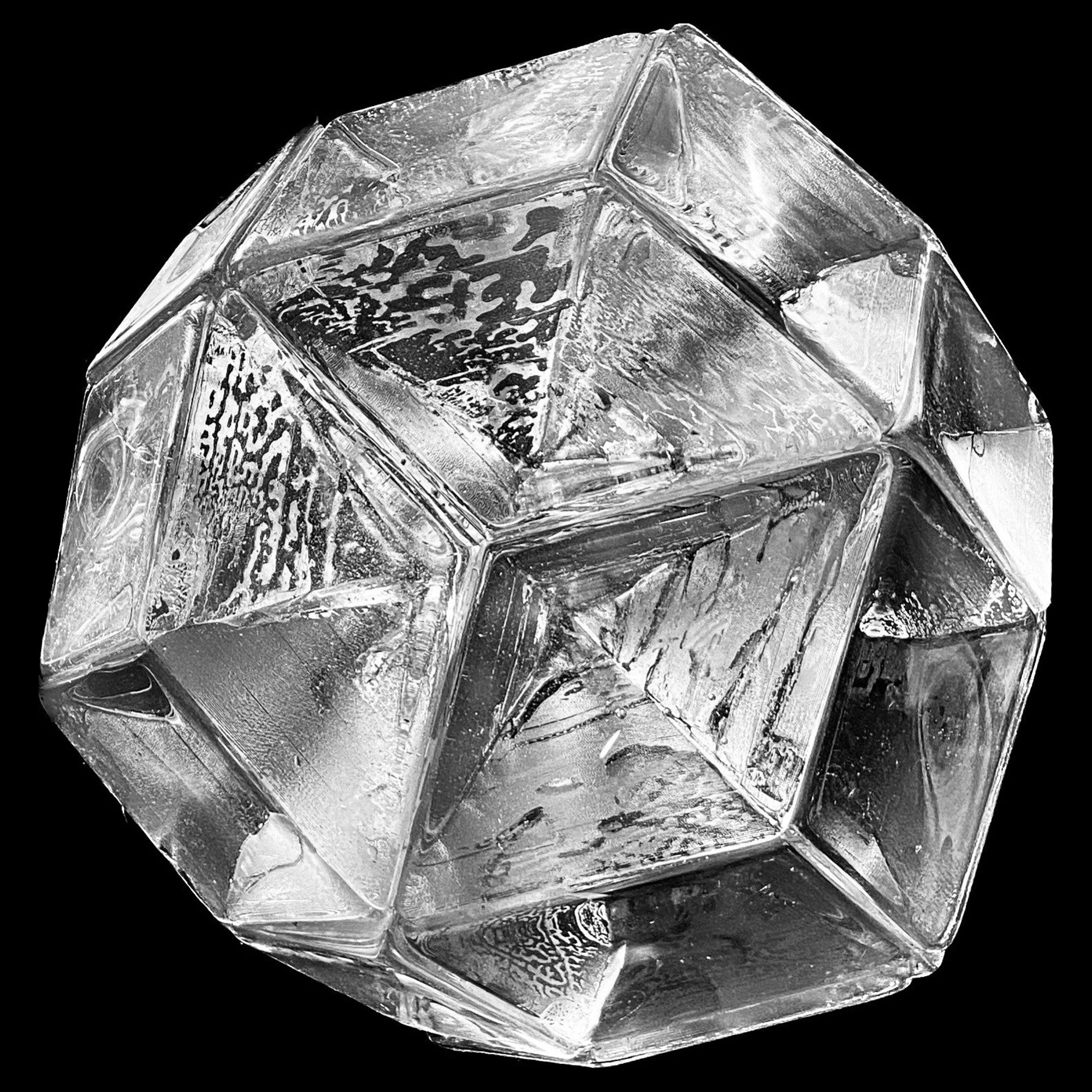
Muladhara 2020, cast and glued glass from digitally designed, CNC carved graphite molds 20x20x20"
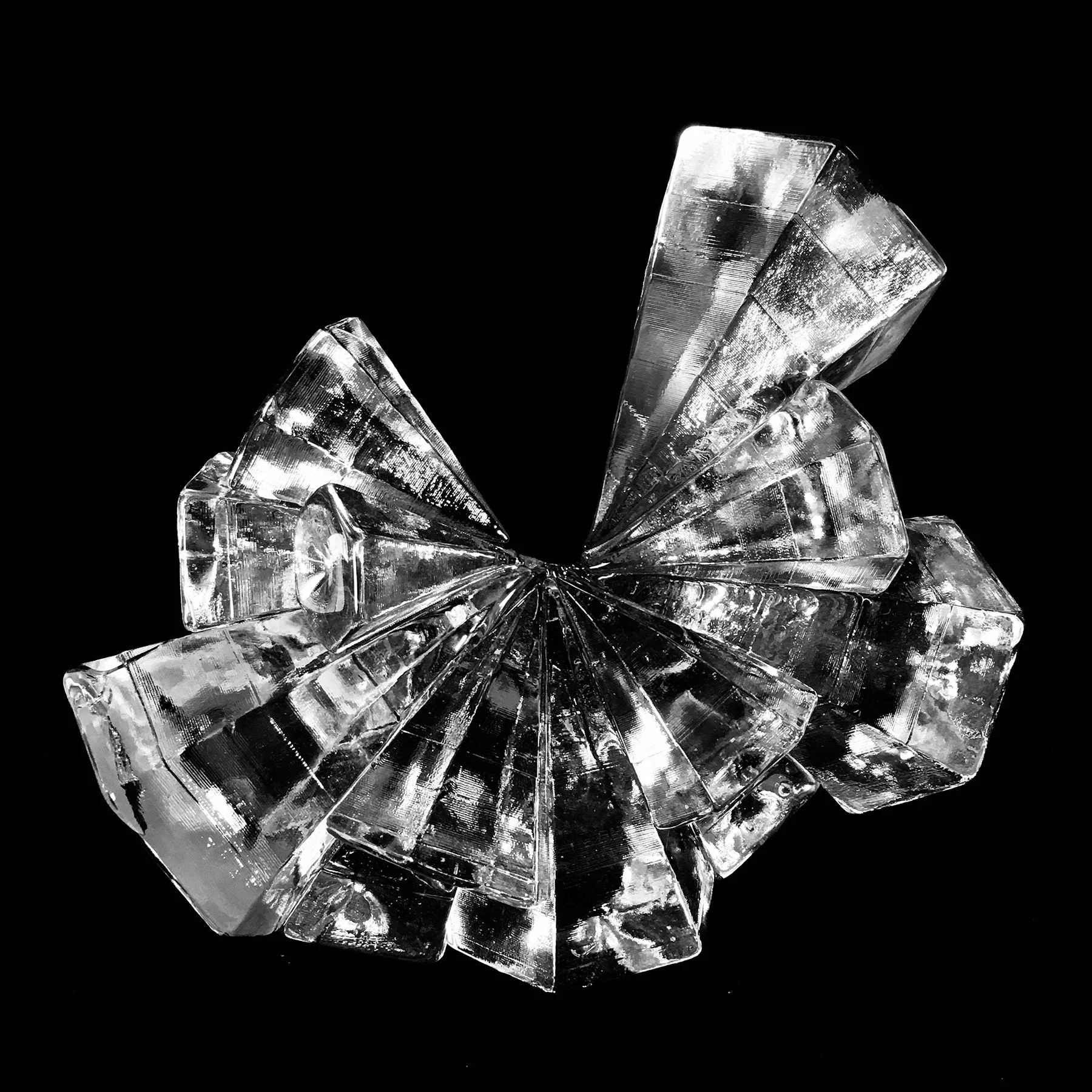
Apsara #3, 2018. Hot joined 5 and 6 sided cast glass cones, forming partial truncated icosahedron crystalline form. 15x16x9”
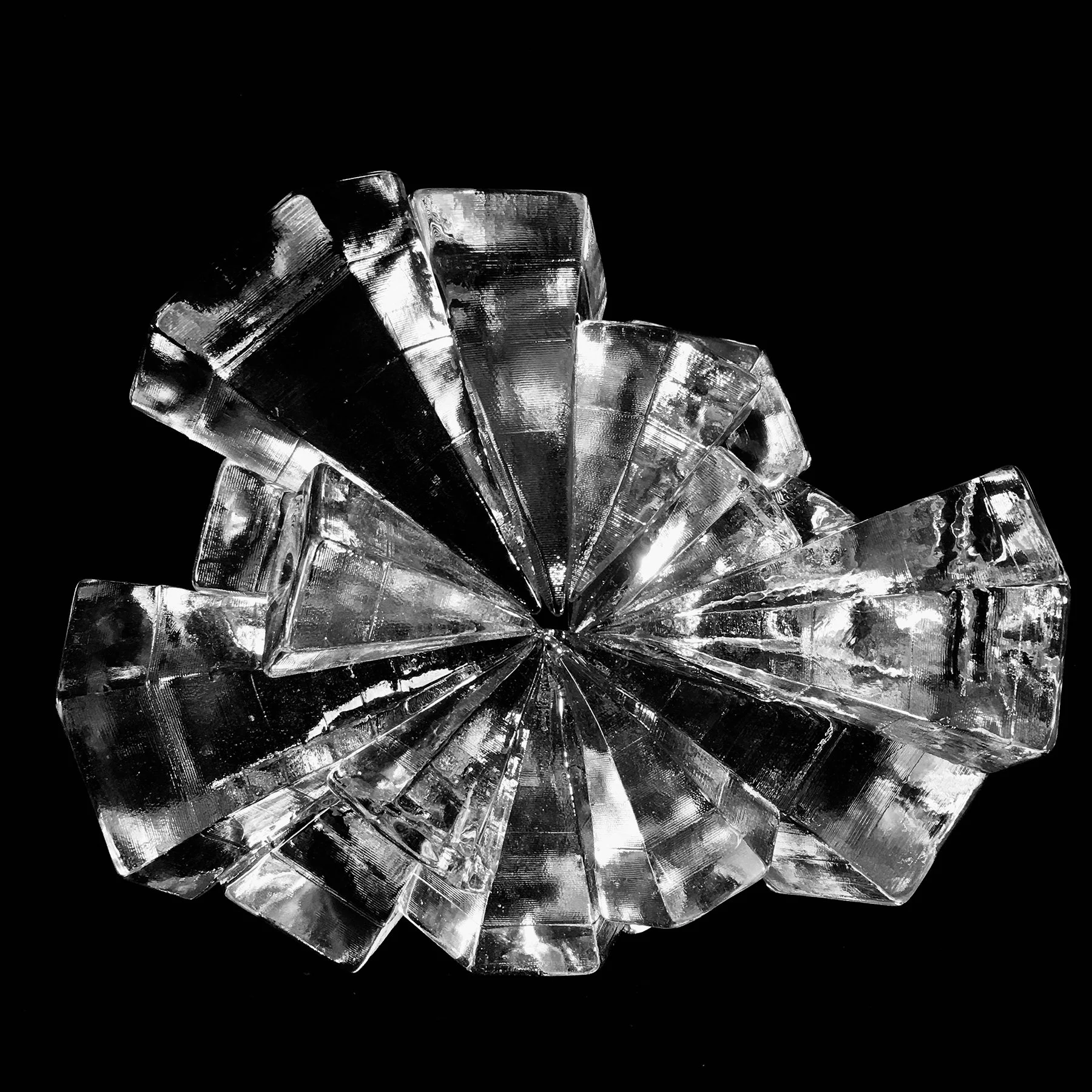
Apsara #9, 2018 Cast and offhand assembled glass 17x14x9"